JioTele OS - India's smartest TV experience
Next-generation smart TV operating system crafted to meet the unique needs of Indian audiences.
Category
UX, UI, Design system
Duration
10 months
Year
2024-2025
JioTele OS - India's smartest TV experience
Next-generation smart TV operating system crafted to meet the unique needs of Indian audiences.
Category
UX, UI, Design system
Duration
10 months
Year
2024-2025
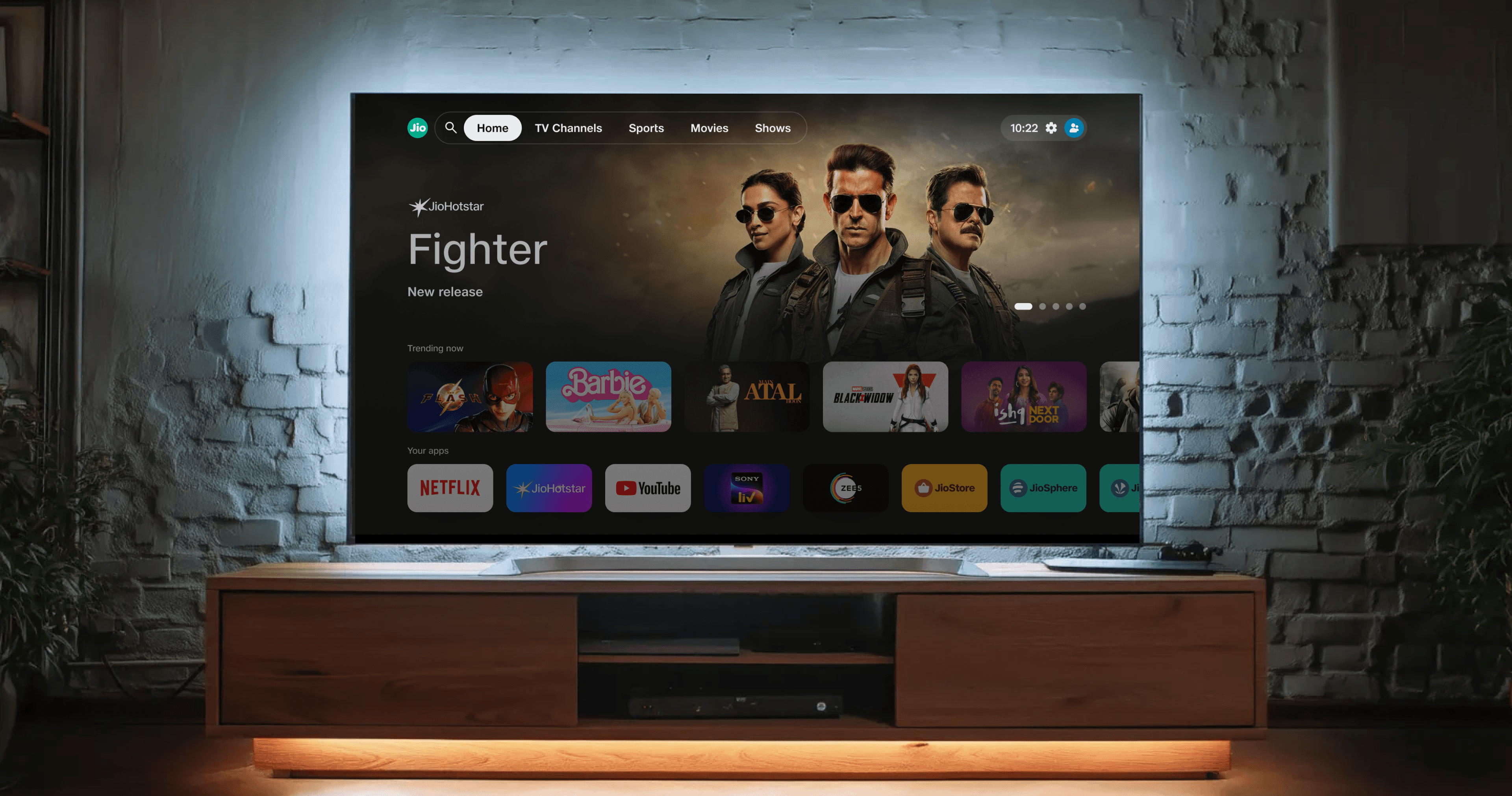
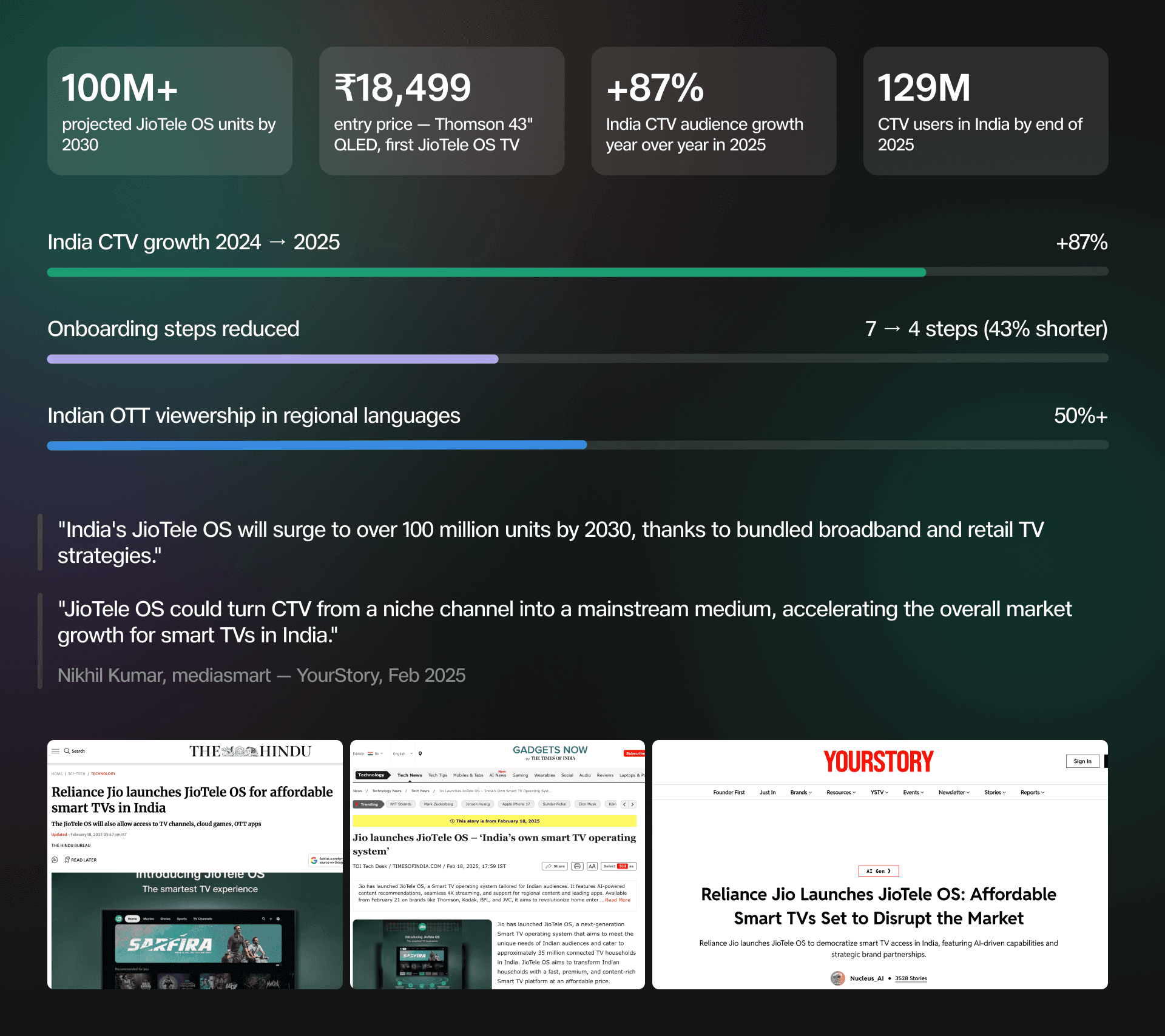
India had 35M connected TV households — but the experience was broken

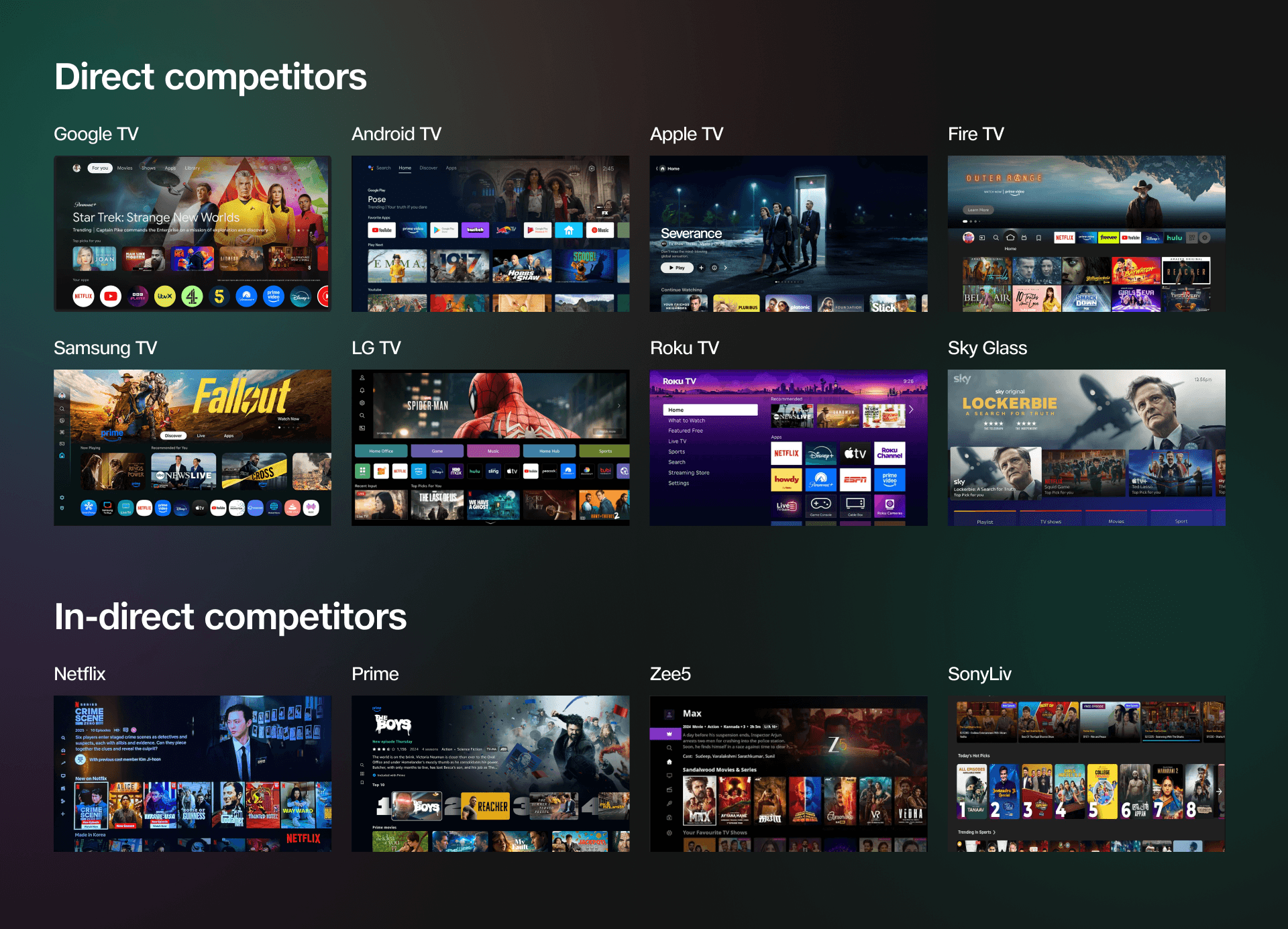
Existing smart TV OSes (Android TV, Tizen, webOS) were built for Western or East Asian markets. India's regional languages, family co-viewing habits, and price-sensitive Tier 2/3 audiences were not primary design constraints. Users spent more time searching than watching — across 55+ competing OTT apps with no unified discovery layer.
Team & My role
Design manager: Stakeholder alignment & direction
Senior UX Designer (Me): Full capacity, Led UX end-to-end —Home & overall experience, design system, Search, FTI-Onboarding, Settings, Content Design, OEM validation, Feedback.
UX Designer: Partial capacity, Contributed to specific flows under design direction
UX Researcher: Partial capacity, In-home research & usability testing
Product cycle
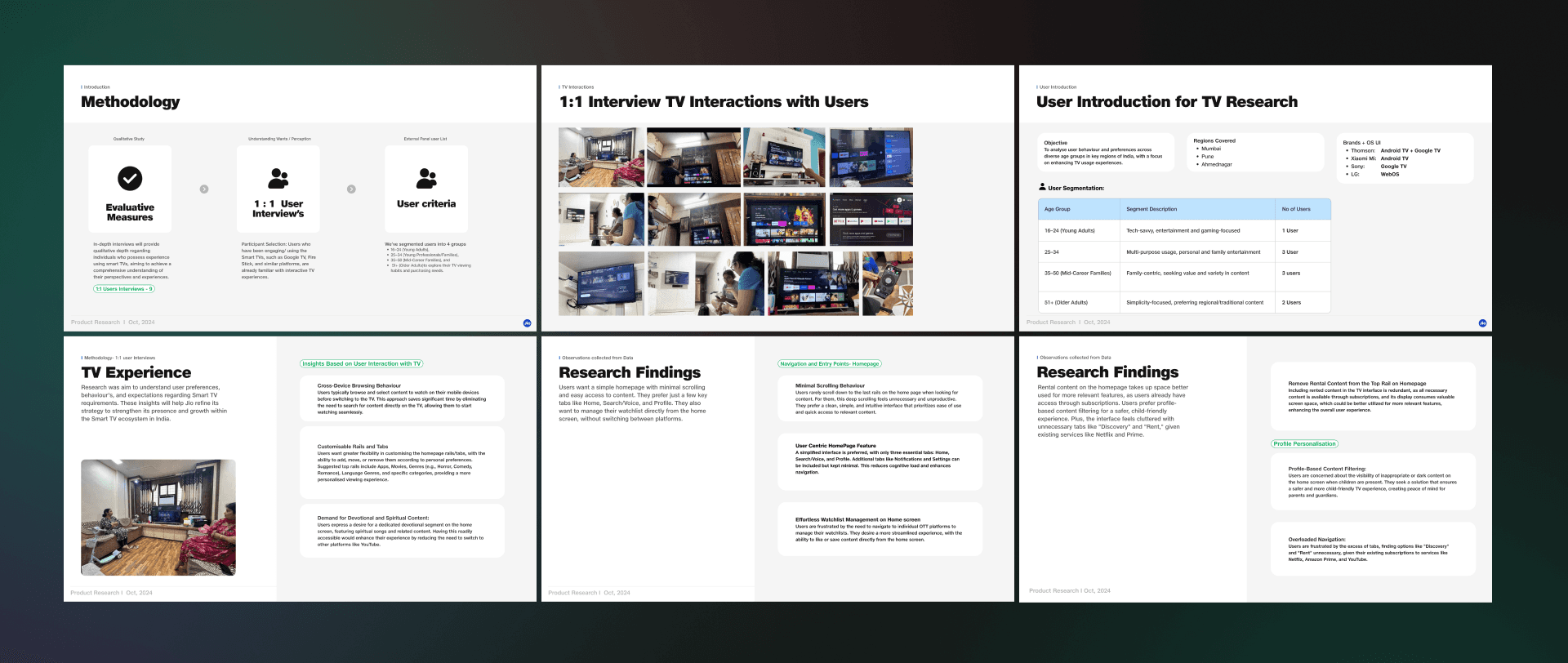
Discovery — Contextual research across Tier 1 and Tier 2 cities. Key findings: Minimal scrolling behaviour, User-centric home page features, Effortless watchlist management, Profile based content filtering.
Principles — Three constraints shaped every decision: remote-first (all interactions achievable with a 5-button D-pad), language-first, family-first (recommendations built for shared Indian household).
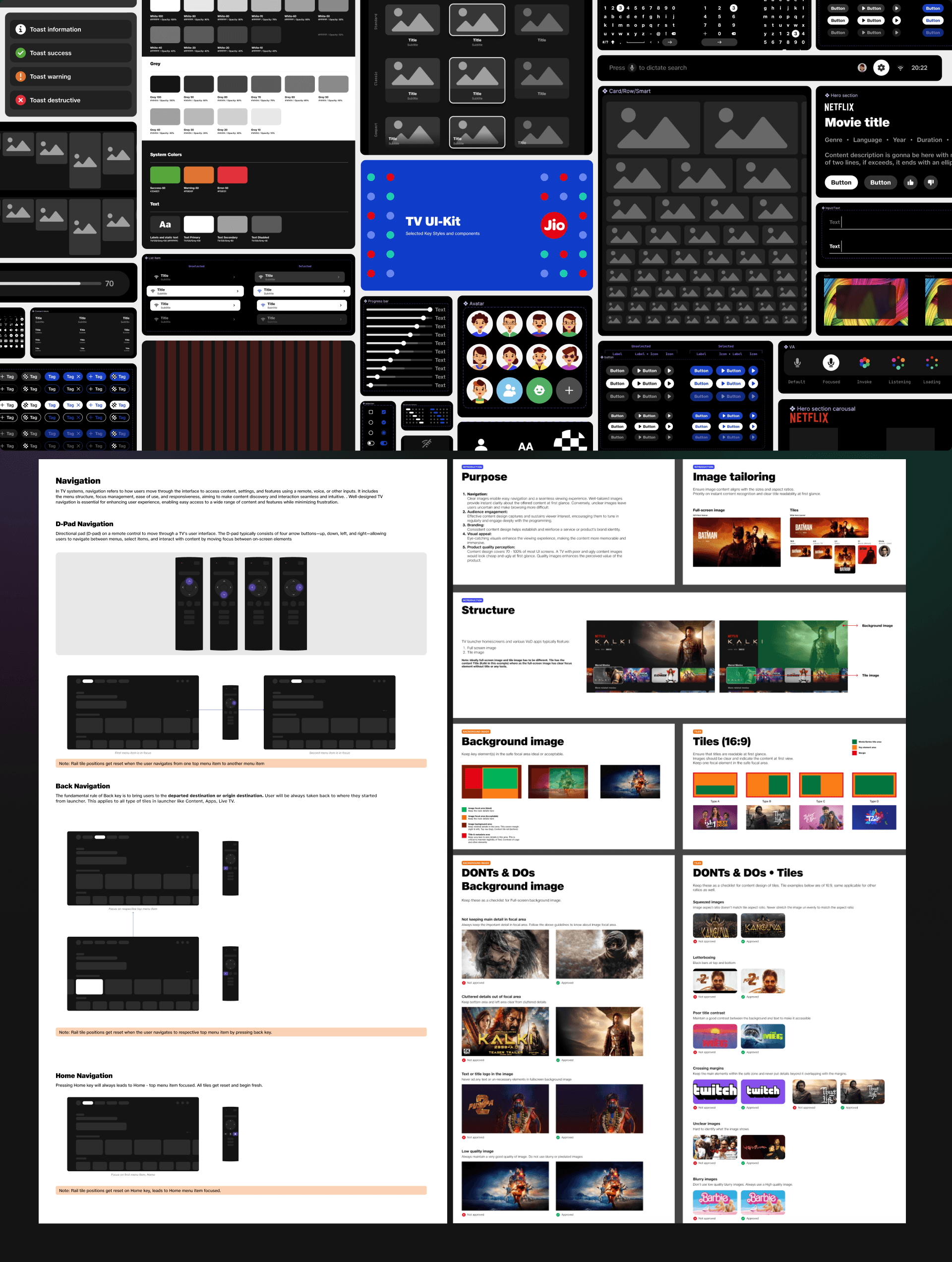
Design system — A TV-native design system designed from scratch — not adapted from mobile. Built to scale across 4 OEM partners, multiple screen sizes, and teams beyond design. Including Focus behaviour, D-Pad Navigation, Robust components, Scalable typography for 10-foot lean back experience, Content design guideline for curation teams, Clear instructions for usage.
OEM validation — Tested across 4 partner devices (Thomson, Kodak, BPL, JVC). Identified functional and experience blockers through iterative robust QA process. Simplified onboarding from 7 steps to 4 after usability testing revealed user frustration over long instructions.
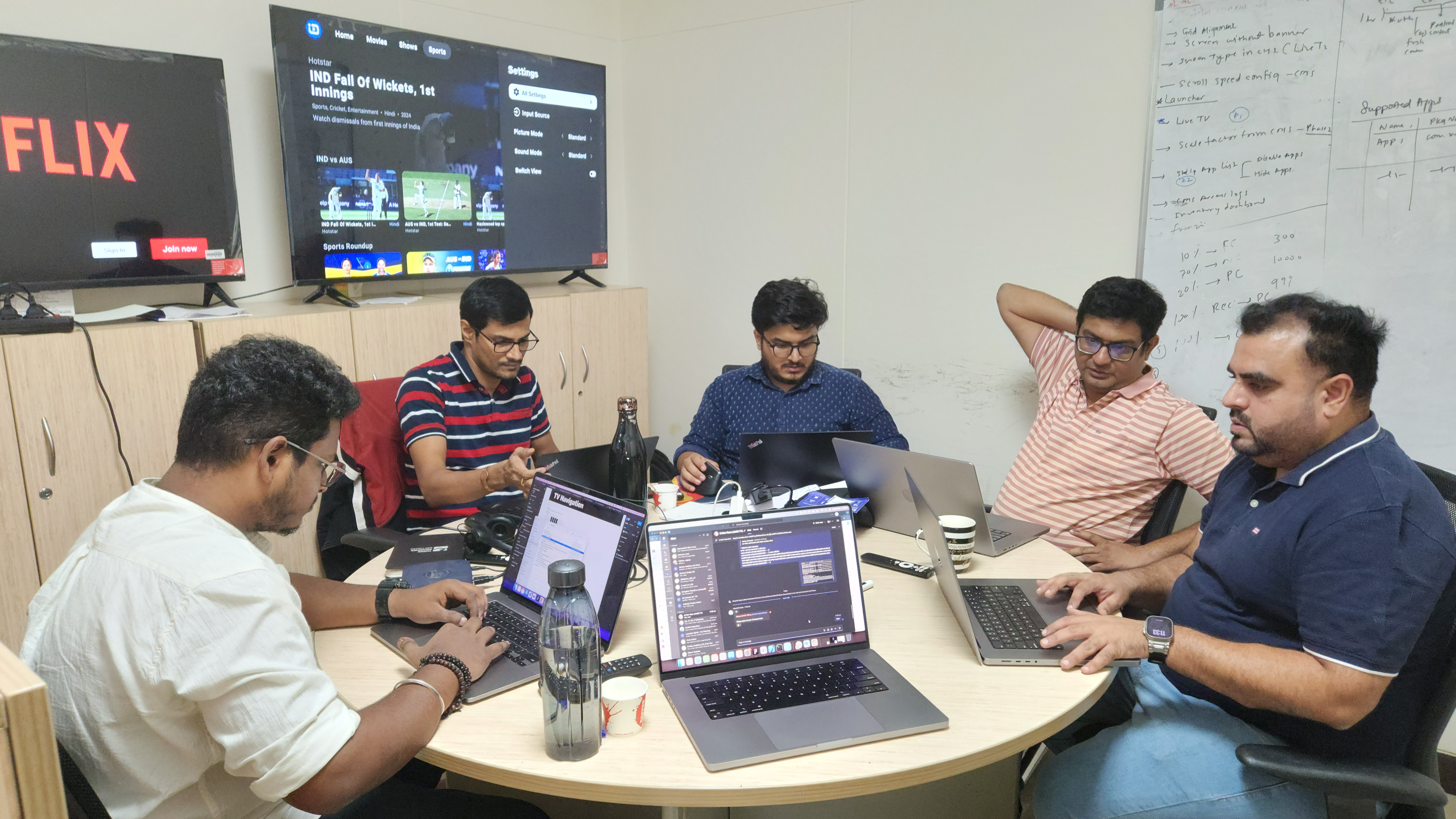
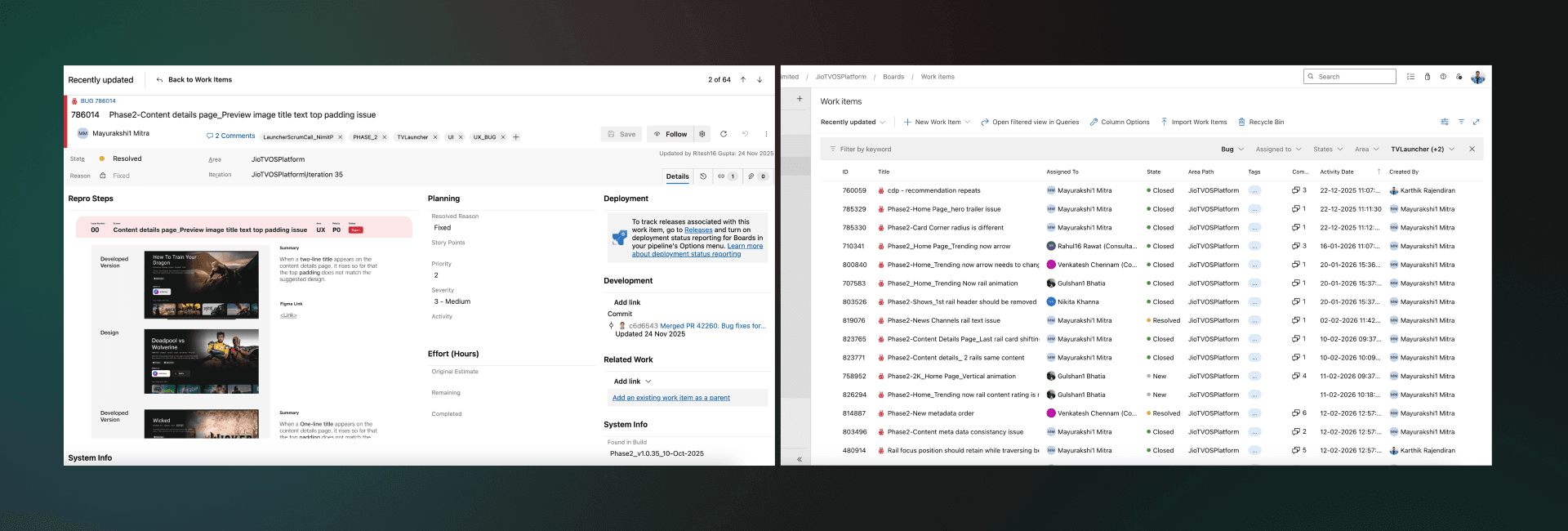
TV specific problems we solved
Insights-driven design that reduces cognitive load and respects attention. JioTele OS was designed in direct response: minimal navigation, deliberate information density, and a visual hierarchy that lets users focus on content, not the UI around it.
Watchlist
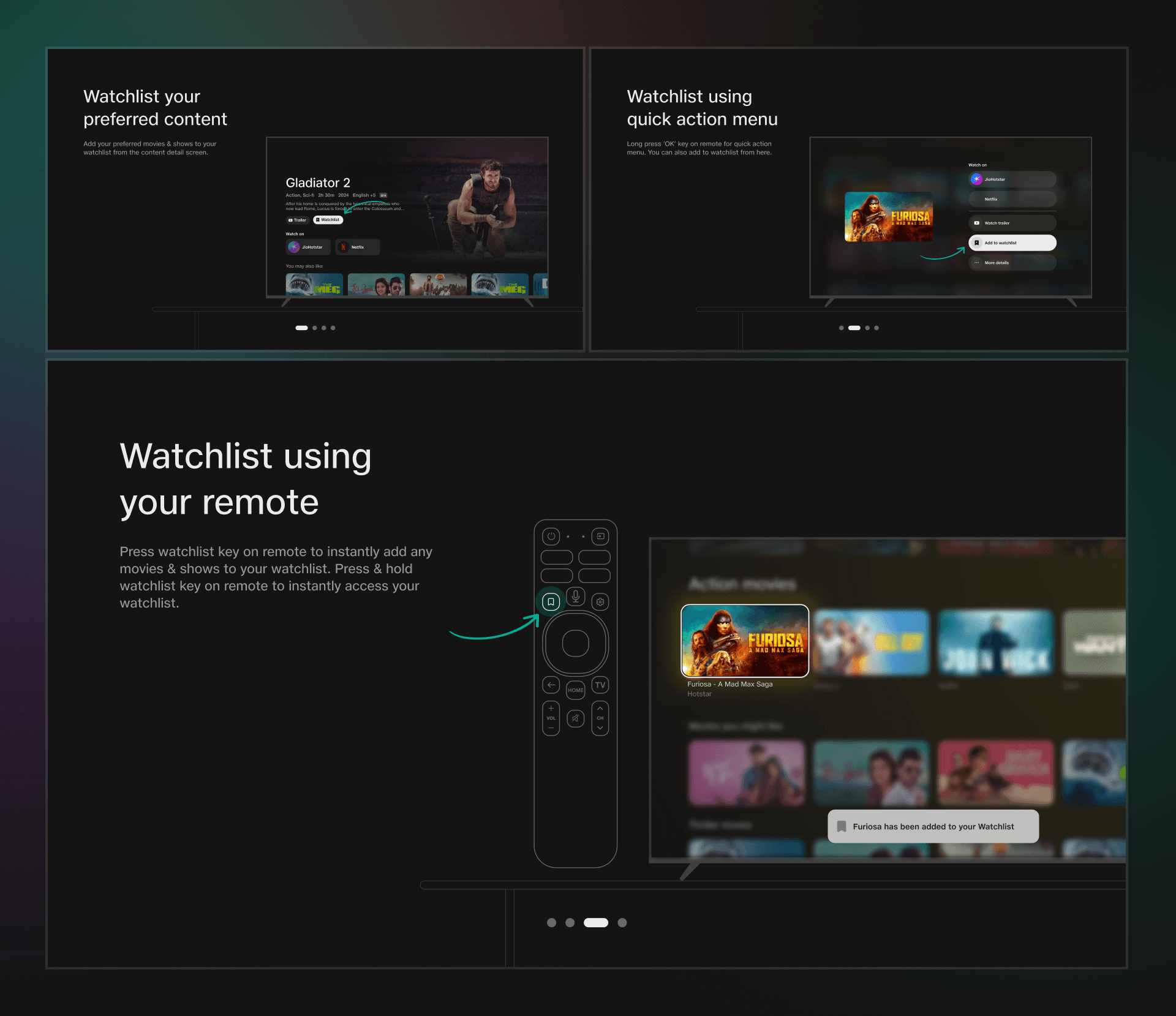
Saving content on a TV should feel as natural as watching it. We designed three distinct ways to add to watchlist — reducing friction at every point in the viewing journey.
Content Detail Page - Traditional entry point
The standard path — users browse to a title, open the detail page, and save it to their watchlist. Designed with a persistent, clearly labelled action so it's discoverable without instruction.
Quick Action
Users can add content to their watchlist directly from the home screen rail — without opening the detail page. A long-press or secondary D-pad action surfaces a contextual menu with watchlist as the primary option.
Remote Button - Exclusive TV-native innovation
A dedicated watchlist button on the JioTele remote — the first TV OS in India to offer this. One press saves the focused content instantly, with a subtle on-screen confirmation. No navigation required. Designed with clear onboarding instructions so users discover the feature within the first session.
Content Curation
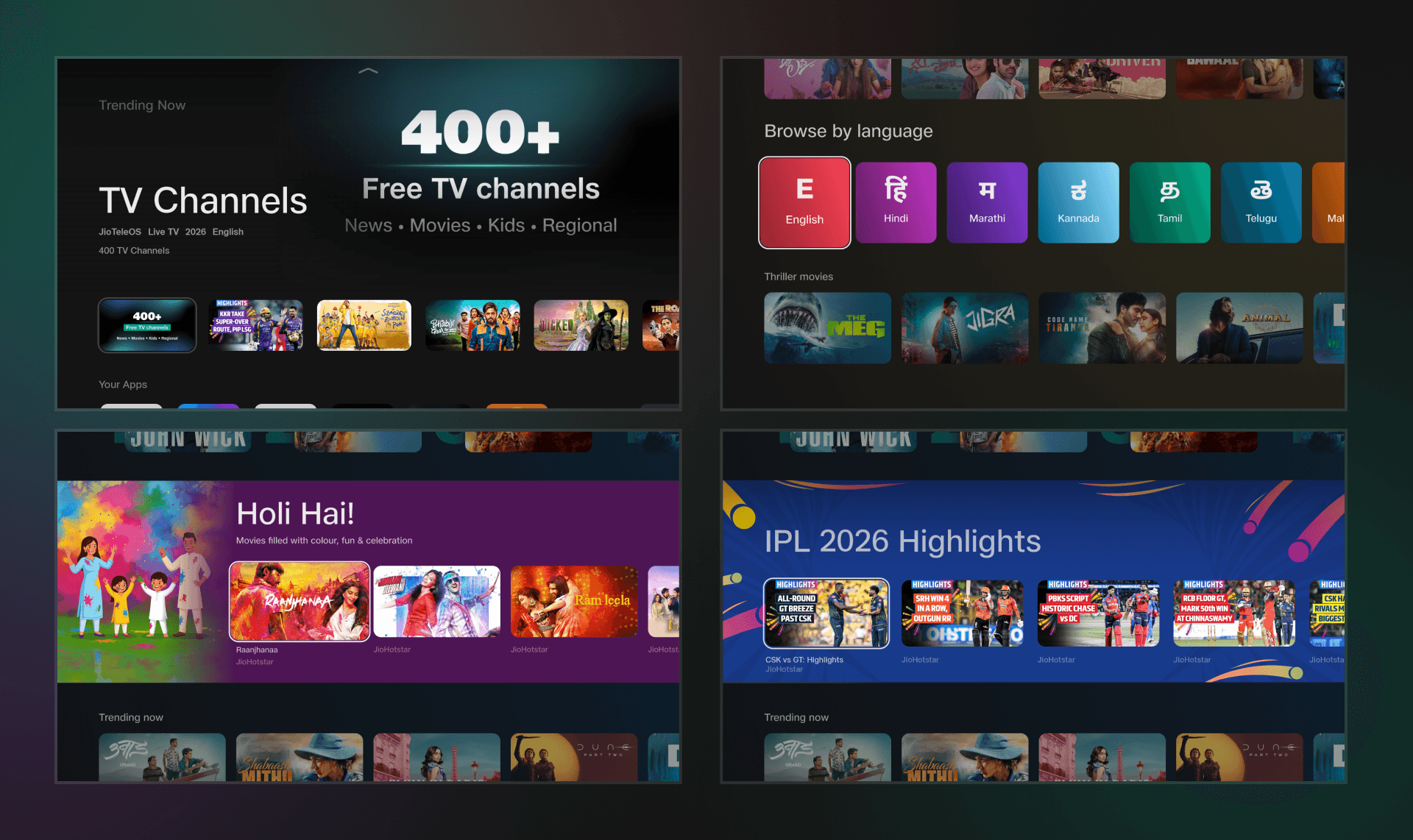
Designed for India's diversity — language, culture, and the shared household.
Regional Language Rails
Home screen curated by the user's language from day one — Tamil, Telugu, Hindi, Bengali, Kannada and more.
400+ Live TV Channels
Free access to news, entertainment, sports, and regional channels — the familiar linear TV experience within a modern OS.
Festival & Sports Rails
Home screen adapts to India's cultural calendar — IPL, ICC, Diwali, Eid, Pongal — not just viewing history.
Shipped in Feb, 2025 — 4 OEM partners at launch
Next steps
Post-launch research revealed two clear next steps — expanding the JioStore app library to include high-demand categories like music streaming and education, and improving OS discoverability so users consciously recognise and value the JioTele experience over standard Android TV.
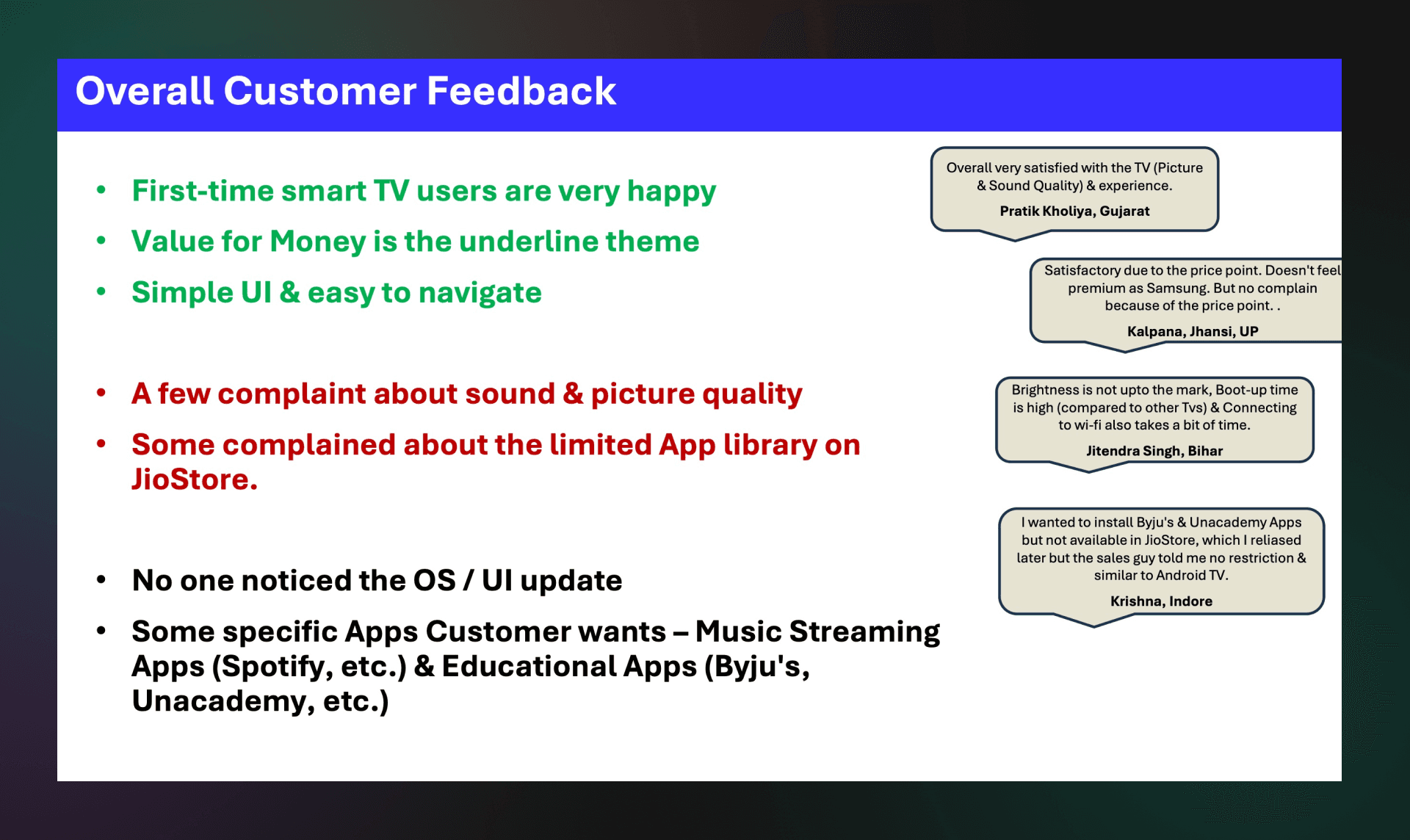
UI was invisible in the best way (simple, easy to navigate) but the OS brand needed stronger onboarding to build user awareness
What I learned
Designing JioTele OS gave me a deep understanding of how live content — sports, news, family events — performs differently on a 10-foot screen than on mobile. Decisions around real-time content labelling, live channel surfing UX, and co-viewing recommendations within a shared household directly inform how I'd approach a live streaming platform for TV.
Enter Password
Hint: Coutdown begins